Monday, April 27, 2015

Your smartphone can detect earthquakes even without additional apps


Your smartphone can detect earthquakes even without additional apps

New Delhi: In a state of natural calamities, communication channels are the most impacted and we begin to wonder if that's just how far technology has been explored. However, did you know that the ubiquitous smartphone can detect earthquakes? And no, we don't mean you need to download a certain app for that.
Your smartphone or tablet comes with a basic seismometer that can detect seismic activity while the phone is placed on a flat table.
A Digital Inspiration blog notes that for your smart device's seismometer to work, you don't need additional apps and just the built-in web browser can help you gauge an earthquake.
Your smartphone or tablet comes with a basic seismometer that can detect seismic activity while the phone is placed on a flat table.

All you have to do is launch the phone or tablet's web browser and open http://ctrlq.org/earthquakes/seismograph.html. You should see a continuously moving waveform, but if you even slightly shake or tilt your mobile device, simulating seismic activity, the graph will capture them in real-time much like a seismograph.
The graph will vary depending upon how vigorous the seismic activity (here, shaking of the phone) is and also change based on the orientation of the device.

This basic seismograph is written using simple JavaScript. Modern-day smartphones have built-in accelerometers and gyroscopes and as you move the physical hardware, the changes in the orientation of the device and acceleration are detected by the browser, which are then mapped into the seismograph.
This motion data is then captured by the HTML5 DeviceOrientation and DeviceMotion events of the browser. You can also test this feature if you are using Google Chrome on the desktop by turning on the Accelerator option under Sensors inside Chrome Dev Tools to simulate motion.

EU project develops air bag ship rescue system to prevent sinking


EU project develops air bag ship rescue system to prevent sinking

In recent years we have seen a number of tragic disasters where ships lose their stability and flips upside down. The Costa Concordia disaster in January 2012 saw the loss of 32 lives after deviating from its planned route and contacting the sea floor. More recently in April 2014 we saw the sinking of the MV Sewol in South Korea with 293 deaths, mostly secondary school children. And it’s not just human lives at stake as oil spillages can be devastating to the environment. Now, there may be hope for future prevention with the SuSy project – Surfacing System for Ship Recovery.

Costa Concordia disaster [Wikimedia Commons]
The SuSy project is an EU-funded investigation into methods of keeping merchant ships upright on the surface in times of buoy damage or other stability destroying issues. They have looked into an airbag system that would deploy airbags during times of distress that would help keep the vessel afloat and what’s more, they have turned the idea into a proof of concept.
In order for such a system to be effective, it needs to be large enough to support the ship in times of danger and also must be able to be deployed rapidly, such that the ship does not topple to a point of no return. The proof of concept was demonstrated in 2013 on a model bottom of a medium-sized tanker in the port of Chalkida, in Greece. “Our challenge was to produce enormous amounts of gas from small cartridges which is quickly released into inflatables,” describes project partner Reinhard Ahlers, managing director of Balance in Germany.
[Image Courtesy of SuSy]
The methodology of the project was a combination of two technologies. The first is the rescue system used in submarines that uses liquid or solid fuel to blow water out of the ballast tanks in a very short time to provide additional buoyancy. The second is the use of air pressure systems with inflatable Kevlar reinforced balloons.
The project looked into and proved two setups, the first having the balloons sandwiched between two hulls and the second having external balloons, however one expert voiced concern at the project’s double hull approach. “Given the location of balloons in the double hull, not only will the construction of the ship be much more difficult and costly. But inspection and maintenance will be almost impossible – hence these systems will be unreliable,” says Egbert Ypma, researcher at the Maritime Research Institute Netherlands in Wageningen, in the Netherlands.
The balloons hold potassium nitrate (used in gunpowder), an epoxy resin and ferric oxide commonly known as rust. The gunpowder oxidises the epoxy resin which produces a gas that consequently inflates the balloons; the rust acts as a catalyst. As the blast is so rapid a lot of heat is generated and to prevent any damage to the balloons, either ambient air can be mixed into the balloon using a secondary cannister or a heat exchanger can be used just before the gases enter the balloon.
The project says that although a proof of concept has been made the project is still far from seeing fruition and there is a lot of work to go to optimise the inflation and location of the balloons. But with such disasters as mentioned before, we eagerly await an additional level of marine safety


Previous
EU project develops air bag ship rescue system to prevent sinking
July 14th, 2014 by
Views: 9,102
In recent years we have seen a number of tragic disasters where ships lose their stability and flips upside down. The Costa Concordia disaster in January 2012 saw the loss of 32 lives after deviating from its planned route and contacting the sea floor. More recently in April 2014 we saw the sinking of the MV Sewol in South Korea with 293 deaths, mostly secondary school children. And it’s not just human lives at stake as oil spillages can be devastating to the environment. Now, there may be hope for future prevention with the SuSy project – Surfacing System for Ship Recovery.
The SuSy project is an EU-funded investigation into methods of keeping merchant ships upright on the surface in times of buoy damage or other stability destroying issues. They have looked into an airbag system that would deploy airbags during times of distress that would help keep the vessel afloat and what’s more, they have turned the idea into a proof of concept.
In order for such a system to be effective, it needs to be large enough to support the ship in times of danger and also must be able to be deployed rapidly, such that the ship does not topple to a point of no return. The proof of concept was demonstrated in 2013 on a model bottom of a medium-sized tanker in the port of Chalkida, in Greece. “Our challenge was to produce enormous amounts of gas from small cartridges which is quickly released into inflatables,” describes project partner Reinhard Ahlers, managing director of Balance in Germany.
suzy_700[Image Courtesy of SuSy]
The methodology of the project was a combination of two technologies. The first is the rescue system used in submarines that uses liquid or solid fuel to blow water out of the ballast tanks in a very short time to provide additional buoyancy. The second is the use of air pressure systems with inflatable Kevlar reinforced balloons.
The project looked into and proved two setups, the first having the balloons sandwiched between two hulls and the second having external balloons, however one expert voiced concern at the project’s double hull approach. “Given the location of balloons in the double hull, not only will the construction of the ship be much more difficult and costly. But inspection and maintenance will be almost impossible – hence these systems will be unreliable,” says Egbert Ypma, researcher at the Maritime Research Institute Netherlands in Wageningen, in the Netherlands.
The balloons hold potassium nitrate (used in gunpowder), an epoxy resin and ferric oxide commonly known as rust. The gunpowder oxidises the epoxy resin which produces a gas that consequently inflates the balloons; the rust acts as a catalyst. As the blast is so rapid a lot of heat is generated and to prevent any damage to the balloons, either ambient air can be mixed into the balloon using a secondary cannister or a heat exchanger can be used just before the gases enter the balloon.
The project says that although a proof of concept has been made the project is still far from seeing fruition and there is a lot of work to go to optimise the inflation and location of the balloons. But with such disasters as mentioned before, we eagerly await an additional level of marine safety
- See more at: http://interestingengineering.com/eu-project-develops-air-bag-ship-rescue-system-to-prevent-sinking/#sthash.JAB38X8T.dpuf
Previous
EU project develops air bag ship rescue system to prevent sinking
July 14th, 2014 by
Views: 9,102
In recent years we have seen a number of tragic disasters where ships lose their stability and flips upside down. The Costa Concordia disaster in January 2012 saw the loss of 32 lives after deviating from its planned route and contacting the sea floor. More recently in April 2014 we saw the sinking of the MV Sewol in South Korea with 293 deaths, mostly secondary school children. And it’s not just human lives at stake as oil spillages can be devastating to the environment. Now, there may be hope for future prevention with the SuSy project – Surfacing System for Ship Recovery.
The SuSy project is an EU-funded investigation into methods of keeping merchant ships upright on the surface in times of buoy damage or other stability destroying issues. They have looked into an airbag system that would deploy airbags during times of distress that would help keep the vessel afloat and what’s more, they have turned the idea into a proof of concept.
In order for such a system to be effective, it needs to be large enough to support the ship in times of danger and also must be able to be deployed rapidly, such that the ship does not topple to a point of no return. The proof of concept was demonstrated in 2013 on a model bottom of a medium-sized tanker in the port of Chalkida, in Greece. “Our challenge was to produce enormous amounts of gas from small cartridges which is quickly released into inflatables,” describes project partner Reinhard Ahlers, managing director of Balance in Germany.
suzy_700[Image Courtesy of SuSy]
The methodology of the project was a combination of two technologies. The first is the rescue system used in submarines that uses liquid or solid fuel to blow water out of the ballast tanks in a very short time to provide additional buoyancy. The second is the use of air pressure systems with inflatable Kevlar reinforced balloons.
The project looked into and proved two setups, the first having the balloons sandwiched between two hulls and the second having external balloons, however one expert voiced concern at the project’s double hull approach. “Given the location of balloons in the double hull, not only will the construction of the ship be much more difficult and costly. But inspection and maintenance will be almost impossible – hence these systems will be unreliable,” says Egbert Ypma, researcher at the Maritime Research Institute Netherlands in Wageningen, in the Netherlands.
The balloons hold potassium nitrate (used in gunpowder), an epoxy resin and ferric oxide commonly known as rust. The gunpowder oxidises the epoxy resin which produces a gas that consequently inflates the balloons; the rust acts as a catalyst. As the blast is so rapid a lot of heat is generated and to prevent any damage to the balloons, either ambient air can be mixed into the balloon using a secondary cannister or a heat exchanger can be used just before the gases enter the balloon.
The project says that although a proof of concept has been made the project is still far from seeing fruition and there is a lot of work to go to optimise the inflation and location of the balloons. But with such disasters as mentioned before, we eagerly await an additional level of marine safety.
Via: [SuSy]
Also check out the full pdf report [here]
Google+
- See more at: http://interestingengineering.com/eu-project-develops-air-bag-ship-rescue-system-to-prevent-sinking/#sthash.JAB38X8T.dpuf
Previous
EU project develops air bag ship rescue system to prevent sinking
July 14th, 2014 by
Views: 9,102
In recent years we have seen a number of tragic disasters where ships lose their stability and flips upside down. The Costa Concordia disaster in January 2012 saw the loss of 32 lives after deviating from its planned route and contacting the sea floor. More recently in April 2014 we saw the sinking of the MV Sewol in South Korea with 293 deaths, mostly secondary school children. And it’s not just human lives at stake as oil spillages can be devastating to the environment. Now, there may be hope for future prevention with the SuSy project – Surfacing System for Ship Recovery.
The SuSy project is an EU-funded investigation into methods of keeping merchant ships upright on the surface in times of buoy damage or other stability destroying issues. They have looked into an airbag system that would deploy airbags during times of distress that would help keep the vessel afloat and what’s more, they have turned the idea into a proof of concept.
In order for such a system to be effective, it needs to be large enough to support the ship in times of danger and also must be able to be deployed rapidly, such that the ship does not topple to a point of no return. The proof of concept was demonstrated in 2013 on a model bottom of a medium-sized tanker in the port of Chalkida, in Greece. “Our challenge was to produce enormous amounts of gas from small cartridges which is quickly released into inflatables,” describes project partner Reinhard Ahlers, managing director of Balance in Germany.
suzy_700[Image Courtesy of SuSy]
The methodology of the project was a combination of two technologies. The first is the rescue system used in submarines that uses liquid or solid fuel to blow water out of the ballast tanks in a very short time to provide additional buoyancy. The second is the use of air pressure systems with inflatable Kevlar reinforced balloons.
The project looked into and proved two setups, the first having the balloons sandwiched between two hulls and the second having external balloons, however one expert voiced concern at the project’s double hull approach. “Given the location of balloons in the double hull, not only will the construction of the ship be much more difficult and costly. But inspection and maintenance will be almost impossible – hence these systems will be unreliable,” says Egbert Ypma, researcher at the Maritime Research Institute Netherlands in Wageningen, in the Netherlands.
The balloons hold potassium nitrate (used in gunpowder), an epoxy resin and ferric oxide commonly known as rust. The gunpowder oxidises the epoxy resin which produces a gas that consequently inflates the balloons; the rust acts as a catalyst. As the blast is so rapid a lot of heat is generated and to prevent any damage to the balloons, either ambient air can be mixed into the balloon using a secondary cannister or a heat exchanger can be used just before the gases enter the balloon.
The project says that although a proof of concept has been made the project is still far from seeing fruition and there is a lot of work to go to optimise the inflation and location of the balloons. But with such disasters as mentioned before, we eagerly await an additional level of marine safety.
Via: [SuSy]
Also check out the full pdf report [here]
Google+
- See more at: http://interestingengineering.com/eu-project-develops-air-bag-ship-rescue-system-to-prevent-sinking/#sthash.JAB38X8T.dpuf
Previous
EU project develops air bag ship rescue system to prevent sinking
July 14th, 2014 by
Views: 9,102
In recent years we have seen a number of tragic disasters where ships lose their stability and flips upside down. The Costa Concordia disaster in January 2012 saw the loss of 32 lives after deviating from its planned route and contacting the sea floor. More recently in April 2014 we saw the sinking of the MV Sewol in South Korea with 293 deaths, mostly secondary school children. And it’s not just human lives at stake as oil spillages can be devastating to the environment. Now, there may be hope for future prevention with the SuSy project – Surfacing System for Ship Recovery.
The SuSy project is an EU-funded investigation into methods of keeping merchant ships upright on the surface in times of buoy damage or other stability destroying issues. They have looked into an airbag system that would deploy airbags during times of distress that would help keep the vessel afloat and what’s more, they have turned the idea into a proof of concept.
In order for such a system to be effective, it needs to be large enough to support the ship in times of danger and also must be able to be deployed rapidly, such that the ship does not topple to a point of no return. The proof of concept was demonstrated in 2013 on a model bottom of a medium-sized tanker in the port of Chalkida, in Greece. “Our challenge was to produce enormous amounts of gas from small cartridges which is quickly released into inflatables,” describes project partner Reinhard Ahlers, managing director of Balance in Germany.
suzy_700[Image Courtesy of SuSy]
The methodology of the project was a combination of two technologies. The first is the rescue system used in submarines that uses liquid or solid fuel to blow water out of the ballast tanks in a very short time to provide additional buoyancy. The second is the use of air pressure systems with inflatable Kevlar reinforced balloons.
The project looked into and proved two setups, the first having the balloons sandwiched between two hulls and the second having external balloons, however one expert voiced concern at the project’s double hull approach. “Given the location of balloons in the double hull, not only will the construction of the ship be much more difficult and costly. But inspection and maintenance will be almost impossible – hence these systems will be unreliable,” says Egbert Ypma, researcher at the Maritime Research Institute Netherlands in Wageningen, in the Netherlands.
The balloons hold potassium nitrate (used in gunpowder), an epoxy resin and ferric oxide commonly known as rust. The gunpowder oxidises the epoxy resin which produces a gas that consequently inflates the balloons; the rust acts as a catalyst. As the blast is so rapid a lot of heat is generated and to prevent any damage to the balloons, either ambient air can be mixed into the balloon using a secondary cannister or a heat exchanger can be used just before the gases enter the balloon.
The project says that although a proof of concept has been made the project is still far from seeing fruition and there is a lot of work to go to optimise the inflation and location of the balloons. But with such disasters as mentioned before, we eagerly await an additional level of marine safety.
Via: [SuSy]
Also check out the full pdf report [here]
Google+
- See more at: http://interestingengineering.com/eu-project-develops-air-bag-ship-rescue-system-to-prevent-sinking/#sthash.JAB38X8T.dpuf
Previous
EU project develops air bag ship rescue system to prevent sinking
July 14th, 2014 by
Views: 9,102
In recent years we have seen a number of tragic disasters where ships lose their stability and flips upside down. The Costa Concordia disaster in January 2012 saw the loss of 32 lives after deviating from its planned route and contacting the sea floor. More recently in April 2014 we saw the sinking of the MV Sewol in South Korea with 293 deaths, mostly secondary school children. And it’s not just human lives at stake as oil spillages can be devastating to the environment. Now, there may be hope for future prevention with the SuSy project – Surfacing System for Ship Recovery.
The SuSy project is an EU-funded investigation into methods of keeping merchant ships upright on the surface in times of buoy damage or other stability destroying issues. They have looked into an airbag system that would deploy airbags during times of distress that would help keep the vessel afloat and what’s more, they have turned the idea into a proof of concept.
In order for such a system to be effective, it needs to be large enough to support the ship in times of danger and also must be able to be deployed rapidly, such that the ship does not topple to a point of no return. The proof of concept was demonstrated in 2013 on a model bottom of a medium-sized tanker in the port of Chalkida, in Greece. “Our challenge was to produce enormous amounts of gas from small cartridges which is quickly released into inflatables,” describes project partner Reinhard Ahlers, managing director of Balance in Germany.
suzy_700[Image Courtesy of SuSy]
The methodology of the project was a combination of two technologies. The first is the rescue system used in submarines that uses liquid or solid fuel to blow water out of the ballast tanks in a very short time to provide additional buoyancy. The second is the use of air pressure systems with inflatable Kevlar reinforced balloons.
The project looked into and proved two setups, the first having the balloons sandwiched between two hulls and the second having external balloons, however one expert voiced concern at the project’s double hull approach. “Given the location of balloons in the double hull, not only will the construction of the ship be much more difficult and costly. But inspection and maintenance will be almost impossible – hence these systems will be unreliable,” says Egbert Ypma, researcher at the Maritime Research Institute Netherlands in Wageningen, in the Netherlands.
The balloons hold potassium nitrate (used in gunpowder), an epoxy resin and ferric oxide commonly known as rust. The gunpowder oxidises the epoxy resin which produces a gas that consequently inflates the balloons; the rust acts as a catalyst. As the blast is so rapid a lot of heat is generated and to prevent any damage to the balloons, either ambient air can be mixed into the balloon using a secondary cannister or a heat exchanger can be used just before the gases enter the balloon.
The project says that although a proof of concept has been made the project is still far from seeing fruition and there is a lot of work to go to optimise the inflation and location of the balloons. But with such disasters as mentioned before, we eagerly await an additional level of marine safety.
Via: [SuSy]
Also check out the full pdf report [here]
Google+
- See more at: http://interestingengineering.com/eu-project-develops-air-bag-ship-rescue-system-to-prevent-sinking/#sthash.JAB38X8T.dpuf

5 of the world’s greatest feats of engineering


5 of the world’s greatest feats of engineering

 
Around the globe there are many feats of engineering that make people stand back in awe. From the Palm Islands in Dubai, built of islands that had to be constructed from rock and sandstone, to stepping out onto an oval glass ring above the Grand Canyon. These are just a couple of amazing constructions found around the world and here are some of the greatest feats of engineering that we think are worth a mention.
The Palm Islands, Dubai.
The Palm Islands in Dubai finished construction September 24 2008 and are made up of around 100 million cubic meters of sand and rock. Before building a total of 210 million cubic meters of limestone, rock and sand was dredged and reclaimed so that the islands could be constructed. The outer ring of Palm Islands took 10 million cubic meters on its own. Rocks that were used in construction of the islands had to be brought from United Arab Emirates quarries, with a total of 16 quarries being used. In total the amount of material that was used in the construction of the Palm Islands would be enough to make a small wall that would go around the globe three times over.

[Image Courtesy of the Palm Jumeirah]
The Burj Khalifa, Dubai.
The Burj Khalifa was completed January 4 2010 and it is not only the world’s tallest building, standing at 828 meters, it is also the tallest free-standing structure. There were many obstacles to overcome when designing and building the structure, one of which were high winds. Due to issues with strong winds the structure underwent more than 40 wind tunnel tests. These were undertaken not only on the building itself but also on the cranes that were being used in the construction.
[Image Courtesy of the Burj Khalifa]
The Skywalk, Grand Canyon.
The Skywalk is a horseshoe walk that was completed March 28 2007 and was the idea of David Jin, a business man from Las Vegas, who discussed the project with the Hualapai tribe. He dreamed up a walkway of glass that stretched out over the Grand Canyon in a half circuit. The Skywalk can hold a total weight of 71 million pounds, which would equate to around 71 fully loaded 747 aircrafts. The walkway is 1,219 meters above the Colorado River and extends 21m from the cliff edge. 83,000 pounds of glass was used in the construction along with one million pounds of steel. The whole thing was constructed on site and drilling for the project took over a year from start to finish.
[Image Courtesy of the Grand Canyon]
The Millau Viaduct, France
The Millau Viaduct was completed on 16 December 2004 and is the highest road bridge deck in the whole of Europe. The viaduct is located 270 meters above the Tarn River at the highest point of the viaduct and it is the tallest bridge in the world; as the viaduct is 342 metres it comes in higher than the Eiffel Tower. The viaduct offers passage between Paris and Spain and helps to ease the congestion. It has a lifespan of around 120 years and cost a total of 320 million Euros to build.

[Image Courtesy of the French Tourism Board]
The Kansai Airport, Osaka, Japan
The Kansai Airport in Osaka, Japan was completed in 1994 at a cost of $20 billion and was the first ever airport to be built on an island that was created artificially. Being one of the most crowded cities in Japan, a new airport was needed in Osaka, so engineers found a solution by making an island measuring 4 kilometres by 2.5 kilometres. It took them three years to build and involved more than 10,000 workers along with 80 ships to excavate the 21 million cubic metres of landfill. It has been one of the most expensive civil engineering projects in the world.

World first images of taste at work on the tongue

World first images of taste at work on the tongue
"Wow. Flavour looks really, really cool."
 
Scientists have for the first time captured live images of the process of taste sensation on the tongue. The international team imaged single cells on the tongue of a mouse with a specially designed microscope system.
“We’ve watched live taste cells capture and process molecules with different tastes,” says biomedical engineer Steve Lee from Australian National University (ANU).
There are more than 2,000 taste buds on the human tongue which can distinguish at least five tastes: salty, sweet, sour, bitter and umami. However, the relationship between the many taste cells within a taste bud and our perception of taste has long been a mystery.
The new imaging tool shows that each taste bud contains cells for different tastes.
Tongue
The team imaged the tongue by shining a bright infrared laser on to the mouse’s tongue which caused different parts of the tongue and the flavour molecules to fluoresce. The team now hopes to monitor the brain while imaging the tongue to track the full process of taste sensation.
“Until we can simultaneously capture both the neurological and physiological events, we can’t fully unravel the logic behind taste,” says Dr Lee.

Scientists are turning salt water into drinking water using solar power

Scientists are turning salt water into drinking water using solar power
The world needs this.


By inexpensively turning salt water into drinking water using sustainable solar power, a team from MIT in the US has not only come up with a portable desalination system for use anywhere in the world that needs it, but it’s just won the 2015 Desal Prize - a competition run by USAID to encourage better solutions to water shortages in developing countries.
In order to win the $140,000 prize, entries had to demonstrate how their invention not only works well, but is cost-effective, environmentally sustainable, and energy efficient. And the MIT researchers teamed up with US-based manufacturing company, Jain Irrigation Systems, to do just that.
The team’s invention works by using solar panels to charge a cache of batteries that power an electrodialysis machine that removes salt from the water and makes it perfectly drinkable. David L. Chandler explains for MIT News:
"Electrodialysis works by passing a stream of water between two electrodes with opposite charges. Because the salt dissolved in water consists of positive and negative ions, the electrodes pull the ions out of the water, Winter says, leaving fresher water at the centre of the flow. A series of membranes separate the freshwater stream from increasingly salty ones."
Solar-powered desalination plants are nothing new, and officials are investigating potential in water-poor areas such as Chile and California right now, but the technology has so far been extremely expensive to both piece together and run. And this obviously makes it difficult for developing countries to adopt. The key to the MIT plant is the electrodialysis process, says Chandler, talking to one of the team, mechanical engineer Amos Winter:
"Both electrodialysis and reverse osmosis require the use of membranes, but those in an electrodialysis system are exposed to lower pressures and can be cleared of salt buildup simply by reversing the electrical polarity. That means the expensive membranes should last much longer and require less maintenance, Winter says."
Chandler reports that the MIT system can turn 90 percent of the salt water that's fed into it into drinking water, which is huge, compared to the 40 to 60 percent from reverse-osmosis systems.
The team has been testing their system out in several villages across India since 2014, and have been using the Brackish Groundwater National Desalination Research Facility in the US to run 24-hour tests to analyse its efficiency and cost of maintenance. According to Mary Beth Griggs at Popular Science, in just 24 hours, their system can remove the salt from 2,100 gallons (7,950 litres).
They’re now hoping to expand their field tests to rural communities in developing countries, in the hopes that they can set them up as irrigation systems in small farms. "A solution with the potential to double recoverable water in an environment where water is becoming more precious by the day could have a huge impact," environmental and civil engineer Susan Amrose from the University of California at Berkeley, who was not involved in the research, told MIT News.

Saturday, April 25, 2015

World’s most powerful telescope set to launch in 2018


This is, well, HUGE.


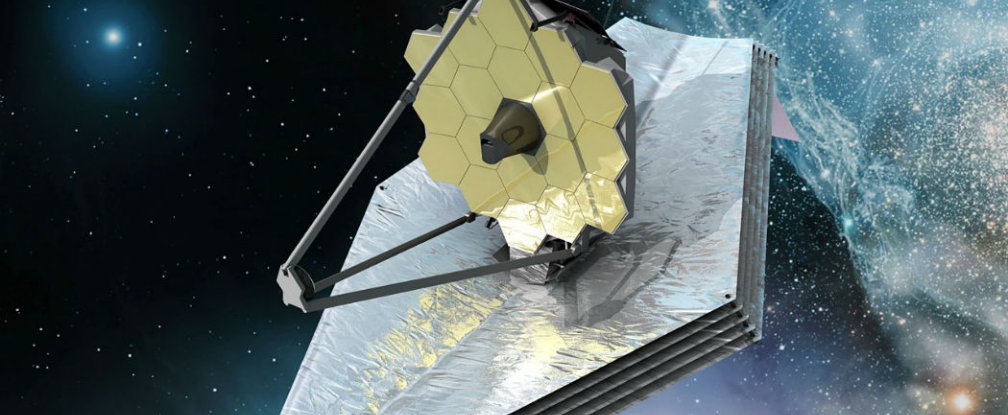
NASA is building the biggest telescope the world has ever seen, and it will give scientists the opportunity to 'see' cosmic events that occurred 13.5 billion years ago - just 220 million years following the Big Bang. Named the James Webb Space Telescope (JWST), it will be 100 times more powerful than the Hubble Space Telescope, and is tipped to be fully operational within the next three years.
"What the Webb will really be doing is looking at the first galaxies of the Universe," project scientist Mark Clampin told the press at NASA's Goddard Space Flight Centre in the US this week. "We will also be able, with these capabilities, to look in very dark parts of the universe where stars are being born."
The JWST includes a mirror 6.5 metres in diameter, which is three times the size of Hubble’s mirror, and it will have 70 times its light-gathering capacity. It will include four cameras and spectrometers, the latter of which is designed to take in light, break it down into its spectral components, and digitise the signal as a function of a wavelength for scientists to interpret.
"We have sensors on board, equipment on board that will enable us to study the atmosphere of exoplanets spectroscopically, so we will be able to understand the composition of those atmospheres,” Matt Greenhouse, a JWST project scientist, told the press. "We can make big progress in the search for life."
Unlike Hubble, which has spent the last 25 years orbiting Earth, the James Webb Space Telescope will go all the way out to one of the Lagrangian points - a set of five equilibrium points in every Earth-Moon System - 1.5 million kilometres (930,000 miles) away. This will keep it far enough away from the Sun so it’s not too hot, and will shelter it from radiation and "prevent it from being blinded by its own infra-red light," Jean-Louis Santini reports for the AFP.
"It will follow Earth around the Sun over the course of the year. So it's in a Sun centre orbit instead of an Earth centre orbit," said Greenhouse. "Just as Hubble rewrote all the textbooks, Webb will rewrite [them] again."
The telescope is expected to launch in October 2018.

TOP 5 Android Smartphones Of 2014 and 2015


TOP 5 Android Smartphones Of 2014 and 2015

Smartphones, they are really smart and having features like Google Now, were don't have to type just speak. Now these features are common. This post is about the smartphones released in year 2014 and 2015 beginning. So this year and previous year has been a world of best line smartphone. Google has been with it's best NEXUS, LG with it's G Series, Samsung with it's Galaxy S series, Sony just unveiled it's new Xperia.

World is at tip of new smartphone releasing line. Without wasting time lets have a look at the TOP 5 Android Smartphones of 2014 and 2015.

1) Samsung Galaxy S6

image credit - GSMarena.com 


No need tell about this phone, you all are excited to use this one. This phone is running the  Android v,5.0.x (Lollipop) skinned with Samsung's TouchWiz UI. S6 has a 5.1 inch screen with 1440 x 2560 pixels (577 ). This phone has a octa-core 1.5 GHz processor running Exynos 7420 chipset with 3 GB RAM and GPU - Mali-T760MP8. S6 is available in 3 variants 32/64/128 GB and NO expandable memory.
Samsung has been good at camera level. S6 has 16 MP, optical image stabilization, autofocus, Dual LED and front facing camera with 5 MP, auto HDR.
S6 has nice but not good 2550 mAH non-removable battery.


2) Samsung Galaxy S6 Edge

image credit - Google Image


Samsung with S6 also announced S6 Edge. The USP of S6 edge is that it has a curved screen. S6 Edge has same 5.1 inch screen with 1440 x 2560 pixels (577 ppi). This phone is running the  Android v,5.0.x (Lollipop) skinned with Samsung's TouchWiz UI. S6 Edge has 1.5 GHz octa-core processor running Exynos 7420 chipset with 3 GB RAM and GPU - Mali-T760MP8. S6 Edge is available in 3 variants 32/64/128 GB and NO expandable memory.
Samsung has been good at camera level. S6 has 16 MP, optical image stabilization, autofocus, Dual LED and front facing camera with 5 MP, auto HDR.
Compared to S6 there is only one upgrade - 2600 mAH non-removable battery.

3) HTC One M9+

image credit - GSMarena.com


HTC One M9+ was a surprise which was launched in China first with HTC One M9. HTC One M9+ is running on Android's sweetest Launch Lollipop skinned with popular HTC Sense 7 UI. HTC One M9+ has a 5.2 inch 1440 x 2560 pixel display (534 ppi). It runs on Octa core 2.2 GHz processor with Mediatek chipset and GPU - PowerVR G6200. HTC One M9+ has a 32 GB with 3 GB RAM which is expandable via microSD up to 128 GB.
It has a dual rear Camera - 20.7 MP + 2.1 MP, autofocus, Dual LED flash and a front facing camera of 4 MP with HDR. HTC One M9+ is backed up with  Non-removable 2840 mAH battery.

4) LG G3

image credit - Google Image


LG is running with it's G series. LG G3 is running on Android v,4.4.2 when it was launched back in May 2014.  G3 has a 5.5 inch, 1440 x 2560 pixels (538 ppi).  It runs on Quad-core 2.5 GHz processor with Qualcomm Snapdragon 501 chipset and GPU - Adreno 330. LG G3 comes in two variants 16 GB with 2 GB RAM and 32  GB with 3 GB RAM which is also expandable via microSD up to 128 GB.
It has a rear camera of 13 MP, laser autofocus, optical image stabilization, dual LED flash and front facing camera of 2.1 MP. LG G3 is powered with 3000 mAH battery.

5) Motorola Nexus 6

image credit - Google Image


Google partnered with Motorola to make it's NEXUS names Nexus 6. Nexus 6 is running Android Stock version of 5.1 Lollipop (current when the till the post is published). It runs on Quad-core 2.7 GHz processor with Qualcomm Snapdragon 805 chipset and GPU - Adreno 420.
Nexus 6 is available in two variants 32/64 GB with 3 GB RAM with no expandable slot.
It has a rear camera of 13 MP, autofocus, optical image stabilization,dual-LED flash and  front facing camera with 2 MP. Nexus 6 is powered with non-removable 3220 mAH battery.