Saturday, May 9, 2015

Hack Day : Boost your Wi-Fi with a beer can


 How to boost your Wi-Fi with a beer can


Each household today uses a wireless router. However, the routers have a specific range for broadcasting the radio signals. Wireless signals are usually affected by a lot of factors—distance, obstacles, power and interferences. While obstacles, power and interferences can be reduced by tweaking things around the house and placing the router appropriately, the wireless range cannot be extended, unless you have a high-end router, or install repeaters and hotspots.
Nevertheless, you can extend your wireless router’s range by a few more meters using a simple hack. The range can be increased by using any simple beer or soda can and you can build the hack within a few minutes. All you need is one or two soda/beer cans and a pair of scissors. Watch the video below on how you can build your simple wireless network range booster, almost for free.


Friday, May 8, 2015

Messenger spacecraft detects 4-billion-year-old magnetic field on Mercury

Messenger spacecraft detects 4-billion-year-old magnetic field on Mercury
No big deal, just the oldest magnetic field in the inner Solar System.
 
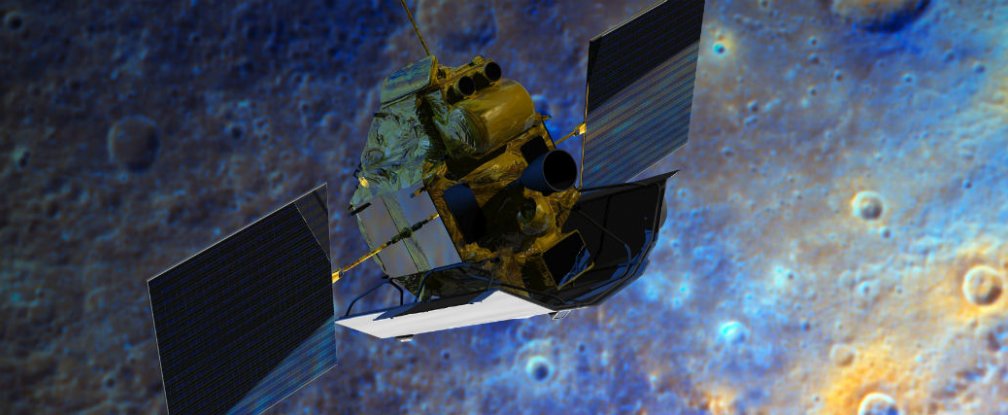
Using data obtained from NASA's now defunct MESSENGER spacecraft, scientists have shown that Mercury's magnetic field could be 4 billion years old, outdating Earth's by upwards of 400 million years.
Launched in 2004, the MESSENGER spacecraft reached the orbit of Mercury in 2011 and circled the planet for four years, usually at altitudes of between 500 and 200 km.
After running out of fuel, the spacecraft ended its 11-year mission by crashing into the planet's surface on April 30th.
But for several months before this spectacularly violent finale, the craft was able to orbit closer and closer to the surface, surveying Mercury's rocky ground in unprecedented detail, and providing new insight into the history and evolution of the planet closest to our Sun.
Now, after examining data from a series of these low altitude passes - some as low as 15 km - researchers have been able to detect traces of magnetisation in ancient rocks in the crust, which they say are a telltale sign of a planet-wide magnetic field, nearly 4 billion years old.
"Until this observation all we really knew about the magnetic field's longevity was that it's been around since the first time we were able to observe it, which was with the Mariner 10 mission," planetary geophysicist and lead author Catherine Johnson, from the University of British Columbia in Canada, told Stuart Gary of the ABC.
"So this tells us that there was a field about four billion years ago, and the simplest interpretation of that would be that Mercury has actually had a magnetic field during that whole time."
Evidence of a magnetic field and a large iron-rich core on Mercury was first uncovered by NASA's Mariner 10 spacecraft during its three flybys of the planet in 1974. MESSENGER has now confirmed the presence of this magnetic field.
Generated by the motion of molten liquid deep inside the planet's core - a force known as geodynamo - the magnetic field is similar to that of Earth's, only much weaker. But now, scientists think it could be a few hundred million years older, even though the two planets formed at the same time nearly 4.5 billion years ago.
"In terms of the inner planets of our Solar System, this is the longest lasting geodynamo generated magnetic field that's been observed so far, including the Earth," Johnson told the ABC. "On Earth we have observations of magnetisation of rocks back to about three-and-a-half billion years."
In order to pinpoint the weak magnetic fields present in Mercury's crust, MESSENGER had to ignore magnetic interference from a range of other sources, including the global magnetic field itself, and the interactions between this planet-wide field and the Sun's solar winds, which generate disruptive electromagnetic currents.
The remnant magnetic signatures were detected in two crater-rich regions: the Suisei Planitia, and another area marked by large cliffs, known as Carnegie Rupes.
As Stuart Gary explains for ABC, the researchers "determined the dates of the magnetised rocks on Mercury by first looking at the number of craters in a given area." An area that's more heavily cratered has endured more asteroid and meteor impacts, than other areas, and is therefore older.
The MESSENGER mission, which has already revealed so much about one of our closest neighbours, will likely continue to yield new insights.
"The mission was originally planned to last one year; no one expected it to go for four," Johnson said in a press release. "The science from these recent observations is really interesting and what we've learned about the magnetic field is just the first part of it."

Scientists have captured the first ever picture of thunder

Scientists have captured the first ever picture of thunder
This is what power looks like.


When it comes to thunderstorms, lightning tends to steal the show, dazzling everyone with its spectacular displays, and overshadowing the powerful long-distance rumbles that accompany the atmospheric energy release.
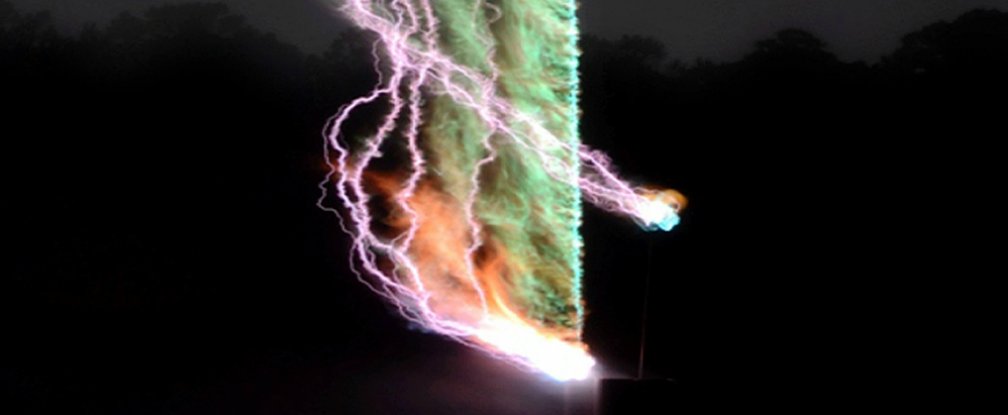
But now a team of scientists working at the Southwest Research Institute in the US has captured the world’s first detailed image of thunder, and it looks even more incredible than we ever imagined.
The image was created using acoustic wave maps, which were based on recordings from a range of microphones positioned around an artificially generated lightning strike.
Because sound waves from higher elevations take longer to travel to the microphones, these recordings allowed the scientists to visualise how the claps and rumbles emitted during a storm move in space.
ts_thunder-briefUniversity of Florida, Florida Institute of Technology, Southwest Research Institute
To understand how thunder works, you first need to understand lightning, which is created by electrical charges moving either within a cloud, or between the cloud and the surface of the Earth. As this charge travels, it heats up the surrounding air, triggering the dramatic release of energy, which causes thunder.

To map the process, the researchers shot a long, Kevlar-coated copper wire into an electrically charged cloud, as you can see in the Science News video below. The result is an impressive lighting strike and resulting thunder, captured by 15 ultra-sensitive microphones positioned 95 metres from the strike point.
The researchers found that the thunder was louder when more current flowed through the lightning, a discovery that could one day help scientists use thunder to work out how much energy is being conducted through lightning. This could potentially be useful if we work out how to harness the energy from lightning.
The results of the research (and this spectacular image) were presented at the meeting of the American Geophysical Union on May 5. Watch your back, lightning, who's the show pony now?
Thunder large inbodyUniversity of Florida, Florida Institute of Technology, Southwest Research Institute

Thursday, May 7, 2015

'Strange signals' from microwave oven puzzled astronomers for decades

'Strange signals' from microwave oven puzzled astronomers for decades
For the sake of astronomers - don't open your microwave door early.


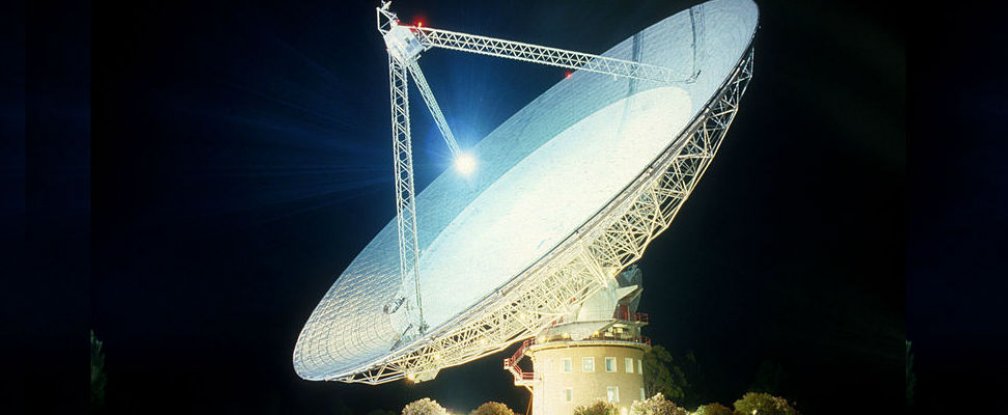
For 17 years, scientists at the Parkes telescope in central-west NSW were perplexed by a mysterious interference they were picking up. The researchers had been detecting signals called perytons "within 5km" of the observatory since 1998, CSIRO astrophysicist, Simon Johnston, told The Guardian.
Named after a mythological hybrid beast with the wings of a bird and the head of a stag, perytons are short radio signals that last for just a few milliseconds, and are thought to originate from phenomena down on Earth. The ones Parkes picked up, observed just once or twice a year, were assumed to be caused by lightning strikes.
"We were getting some strange signals that appeared to be coming from very nearby," Swinburne University PhD student, Emily Petroff, told the ABC.
These signals were so nearby, in fact, that they were being omitted onsite - and not from lightning strikes, but from the staff kitchen microwave. "It was kind of a surprise to all of us," said Petroff.
The mystery was solved when a new receiver was installed at the observatory earlier this year, which picked up strong signals at a frequency of 2.4Ghz. Petroff says the perytons were only omitted if the telescope was pointed towards the microwave - and the microwave door was opened prematurely.
"It turns out that you can generate these particular local signals by opening the door of the microwave to stop the microwave, and that produces these weird bursts that we’re seeing at Parkes," Petroff said of the findings, published in the Notices of the Royal Astronomical Society.
Love technology? Find out more about the innovative courses available at Swinburne University of Technology.

Facebook banned by one of the world's smallest countries

Facebook banned by one of the world's smallest countries


Facebook ban has received criticism from refugee advocates and opposition leaders
Families living in Nauru - one of the world's smallest countries, will no more be allowed to access Facebook. The social media platform has been used for several political protest campaigns in the recent past. A report by Business Insider stated that the government of Nauru plans to censor ‘internet sites that show pornography, particularly those featuring children.’
Around 10,000 inhabitants are annoyed with the government’s decision of banning Facebook. Slate also reported that the citizens of Nauru, one of the smallest countries in the world, are government's lack of transparency, evidenced by its shutting out members of the opposition, having an ineffective parliament where basically there's no scrutiny or debate on policies and activities.
Adding to this, the government has also reportedly also put restrictions on where and when people can protest. This in a way raises a question regarding freedom of speech on social media platforms. Sadly, the refugees in the Nauru detention centre won’t be able to contact family members via Facebook anymore.

Tuesday, May 5, 2015

WATCH: Here's how to make technicolour titanium at home

WATCH: Here's how to make technicolour titanium at home
All the colours of the rainbow with just a few volts of electricity.
 
Here's an awesome chemistry assignment you can try at home - turning an ordinary piece of titanium into a technicolour dream... stick of metal. As seen in the video above by YouTuber Debra Adams, all you need to do is submerge some titanium in a liquid solution, and apply a low voltage to it via a crude anode device.
The process is explained in full at the Mr Titanium website, but here's a basic run-down of what you have to do to replicate the above effect:
  1. Wear rubber gloves so you don't accidentally electrocute yourself. 
  2. Fill a non-conducting tub with an electrolyte solution of either trisodium phosphate, ammonium-phosphate, or Borax. These can all be sourced from your local hardware store.
  3. Get a piece of scrap titanium and immerse it in your electrolyte solution. This will be the piece you're going to colour, and also your cathode - the part from which the electrical current will leave the device you're constructing.
  4. Made an anode - a hook or clip made from titanium works well - and attach it to your cathode. 
      5.Apply a small amount of voltage - between 25 and 120 Volts - to your anode, and adjust to get the right colour. 
As they explain at the Mr Titanium website, the amount of voltage you use determines the colour you're going to bring out in your titanium, and the results also depend on the size of your titanium piece. "For bigger pieces, it just takes longer. Or more current. Use fuses, an ammeter, and/or a power resistor (or a light bulb in series) to avoid burning out your anodiser," the website explains. "The exact voltage it takes to get a particular colour depends on many variable factors such as free-ion content of the electrolyte, surface finish of the metal, etching, stability of the voltage source, and so on. If you want two pieces to exactly match, anodise them at the same time."
Here's a good rule of thumb for colours and voltages. You'll start to get a faint blue colour at around 10 volts, which will lighten out to a near-white at around 50 volts, and you'll achieve a nice, bright green around 110.
So now that we know how to make metal change colour, you probably want to know the science behind why it occurs.
What we're actually doing when we apply a voltage to the titanium is adjusting the oxide level on its surface. Different levels of surface oxidation achieve different oxide thicknesses, and the colours are achieved when light penetrates through this oxide layer and reflects off the metal surface below, causing our eyes to ultimately perceive a certain colour.

WATCH: Water drops levitated by sound explode in slow motion

WATCH: Water drops levitated by sound explode in slow motion
Like tiny fireworks of physics.

 
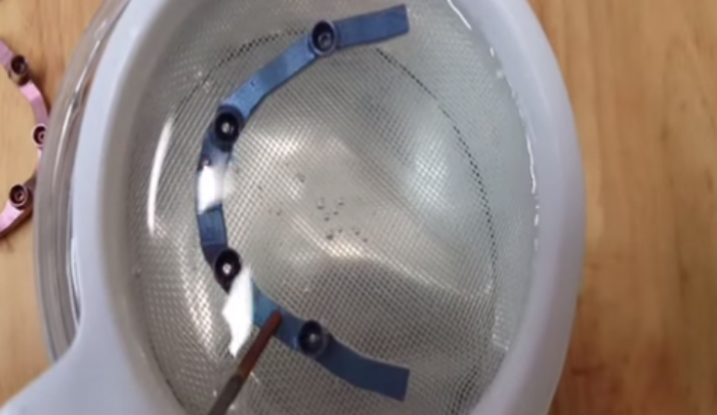
We've seen some pretty cool things in our time, but this is right up there. Watch as water droplets are levitated using nothing but sound, and then see them explode like glistening fireworks in the latest episode of Smarter Every Day. And did we mention the whole thing is filmed in glorious slow motion at 20,000 frames per second?
Of course, what you're seeing here is acoustic levitation, which involves using two sound waves to create a column of standing waves. These standing waves have peaks that oscillate between high and low pressure, but they also have a mid-point in each wave where the pressure doesn't change at all. This creates a little sweet spot where something light, such as a styrofoam ball or a water droplet, can float, constantly being bumped up against the force of gravity by the standing wave below it.
As Destin from Smarter Every Day explains, the standing wave acts sort of like a ping pong paddle, and the levitating object is the ball being rapidly bounced up above it.
This levitation itself is pretty incredible to watch. But Destin also had the opportunity to film levitating water droplets with two high-speed Phantom Cams, and manages to capture what happens when they explode. And the results are pretty spectacular, as you can see above.

So what's causing these water droplets to burst? When you increase amplitude of the sound waves, it effectively changes the length of the standing waves and puts pressure on the levitating water droplets. At some point, that pressure gets so great that surface tension can't hold the drop anymore, and we get an explosion that looks spectacular in slow motion. But don't take our word for it, watch the video to be mesmerised by the beauty of physics.